
Home » Serengeti Great Wildebeest Migrations
The Serengeti National Park is the heartbeat of the Great Wildebeest Migration — one of Earth’s most awe-inspiring natural events. Each year, over a million wildebeest, accompanied by zebras and antelopes, journey across the vast Serengeti plains in search of greener pastures. This extraordinary cycle of life and survival unfolds across sweeping savannahs, dramatic river crossings, and predator-rich territories. From calving season in the southern Serengeti to the dramatic Grumeti River crossings in the west, the Serengeti offers front-row seats to nature’s greatest wildlife spectacle.
The Great Wildebeest Migration in Serengeti National Park is one of the most awe-inspiring wildlife spectacles on Earth. Each year, over two million wildebeest, accompanied by zebras and gazelles, traverse the vast plains of the Serengeti in a continuous cycle driven by rainfall and the search for fresh grazing.
This iconic event draws travelers from around the world who come to witness dramatic river crossings, breathtaking predator-prey encounters, and the raw power of nature in motion.
To help you make the most of your journey, here’s what you need to know:
Where and when the migration happens — month by month
The best time to witness the herds in action
Top locations within the Serengeti for front-row viewing
Insider tips for getting the most out of your migration safari
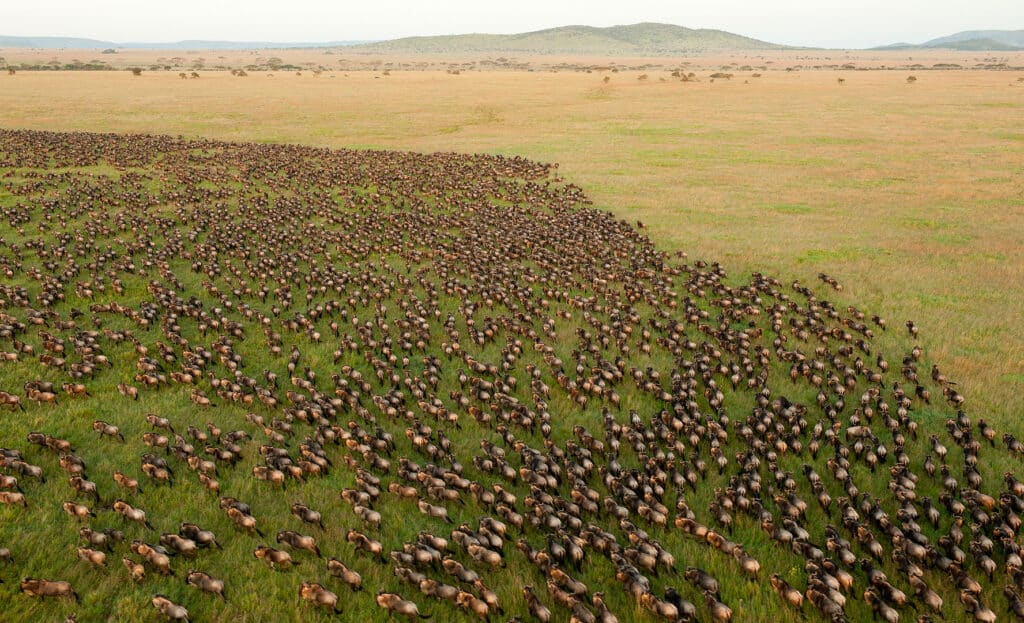
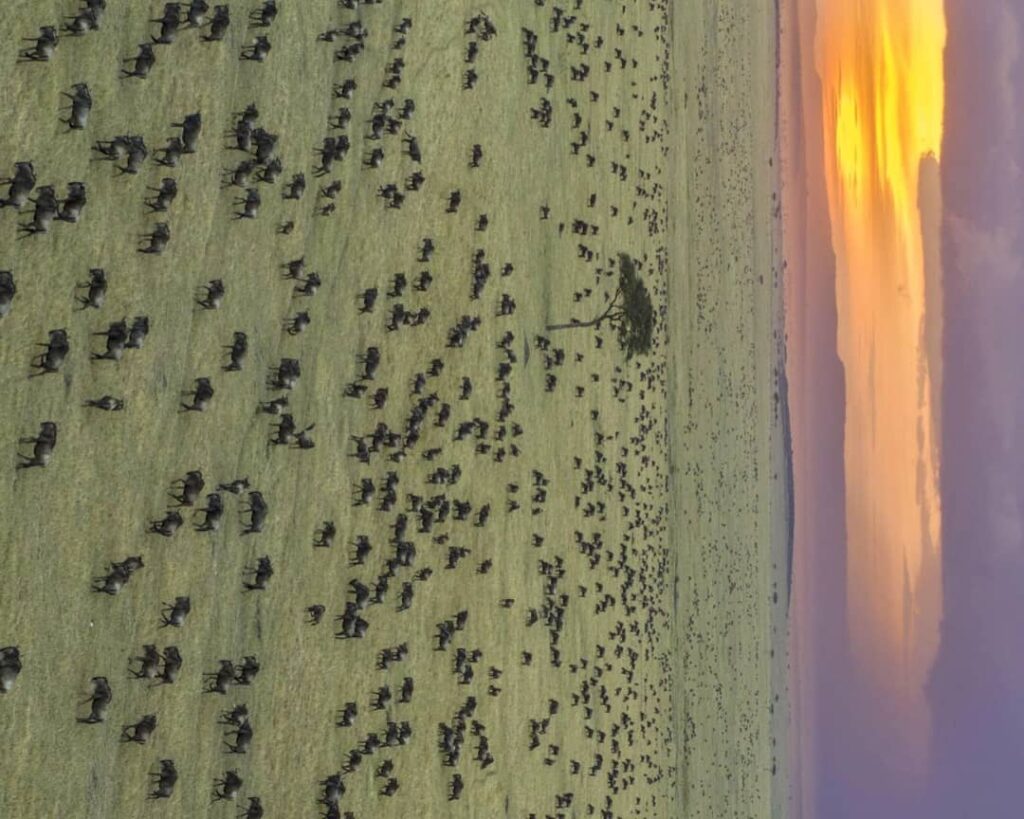
The Serengeti Great Migration is the largest land animal migration on Earth, where nearly two million wildebeests move across the Serengeti ecosystem each year in search of fresh grazing.
While wildebeests lead the journey, they are joined by zebras, Thomson’s gazelles, elands, and topis, forming massive herds across the plains.
This natural cycle follows seasonal rains, beginning in Southern Serengeti (Ndutu area) around December and continuing through Northern Serengeti toward the Masai Mara by July–October.
The migrating herds travel an estimated 1,000 kilometers annually, across open plains, woodlands, and rivers.
During the journey, up to 250,000 wildebeests perish due to predators, exhaustion, or river crossings, making it a dramatic spectacle of survival.
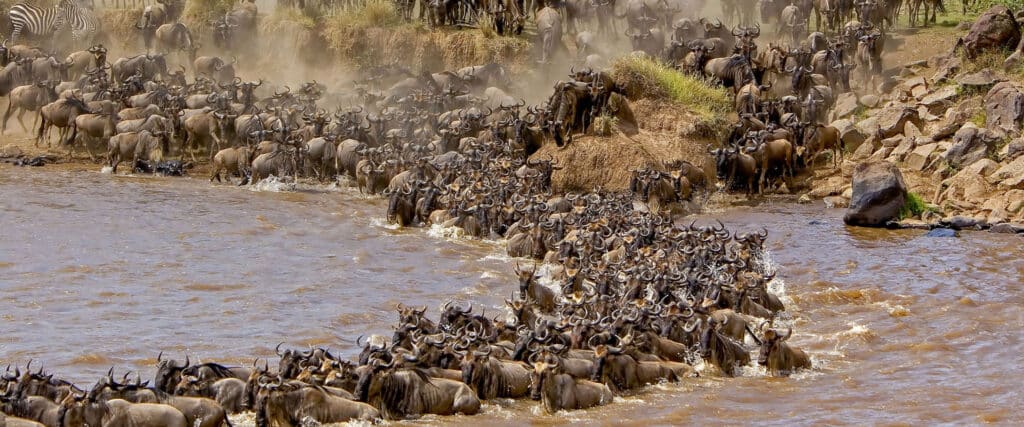
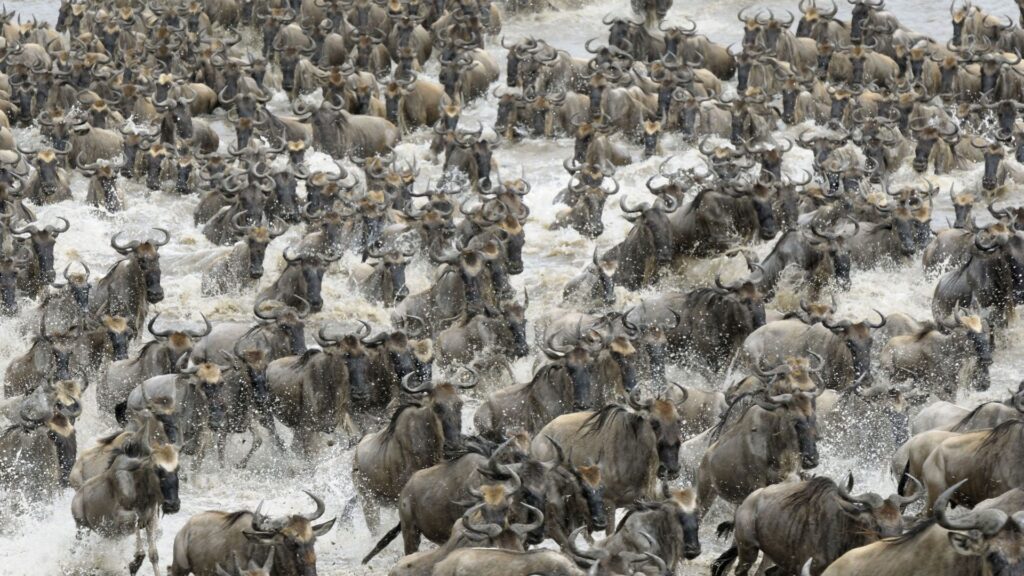
The migration is most famous for the Grumeti and Mara River crossings, where massive herds brave crocodile-infested waters in a display of raw nature at its finest.
The Serengeti Great Migration is a year-round natural spectacle that takes place primarily in Tanzania’s Serengeti National Park. Over 1.5 million wildebeest, along with hundreds of thousands of zebras and gazelles, move in a circular pattern across the Serengeti in search of fresh grazing and water, driven by seasonal rains.
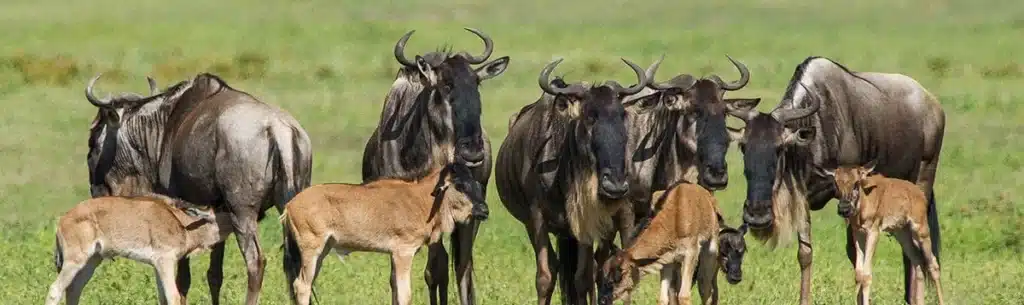
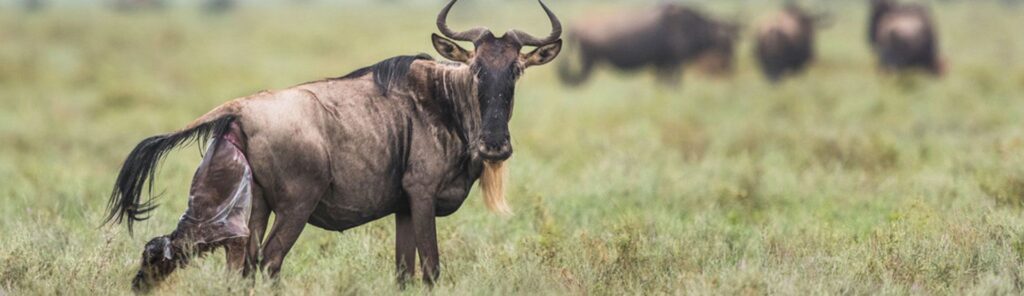
December to March: The herds gather in the southern Serengeti and Ndutu region for calving season — a prime time to witness thousands of baby wildebeest born each day and predators in action.
April to May: As rains end, the herds move northwest through the central Serengeti, offering dramatic scenes across lush green landscapes.
June to July: The migration reaches the Grumeti River, where wildebeest brave crocodile-infested waters. This is a thrilling time for river crossing encounters.
August to October: The herds head north toward the Mara River near the Serengeti-Masai Mara border, creating iconic, high-stakes crossings.
November: The journey cycles back as the wildebeest move south again, returning to the short-grass plains of the southern Serengeti to begin the cycle once more.
Witness the Serengeti Great Migration, where millions of animals move in a seasonal cycle across the plains. Our safari itineraries follow this natural spectacle, taking you to the best spots for calving, river crossings, and predator action.
From December to April, the Serengeti’s southern plains come alive with one of nature’s greatest spectacles—the beginning of the Great Migration. By December, vast herds of wildebeest and zebra gather in the Ndutu region of the southern Serengeti, drawn by the lush green grass following the short rains.
January to March marks a vital period as the plains become a nursery during the calving season. In February alone, over 500,000 wildebeest calves are born, attracting predators like lions, hyenas, and cheetahs in search of vulnerable prey. It’s an extraordinary time to witness dramatic predator-prey interactions.
As April arrives, the herds slowly begin their journey northwest towards the central and western Serengeti. With the long rains nurturing the land, this period also marks the beginning of the mating season, adding another fascinating layer to this dynamic natural cycle.
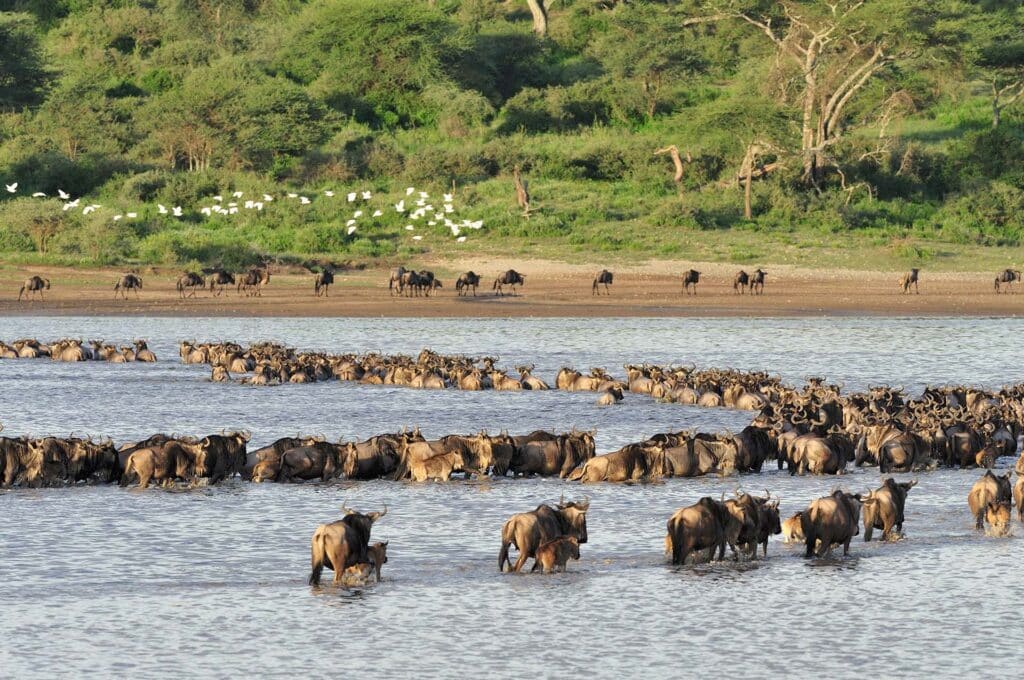
During May and June, the Serengeti comes alive with the dramatic movement of the Great Migration as hundreds of thousands of wildebeest and zebras head toward the northern reaches of the park. This part of the journey takes them through the Western Corridor, a region marked by lush landscapes and the challenging Grumeti River. Here, the animals must brave crocodile-infested waters in one of nature’s most intense survival challenges.
As the herds push forward, they split along different paths—some moving through the Grumeti and Ikorongo Game Reserves, while others press deeper into the heart of Serengeti National Park. This stage of the migration is not only visually stunning but also a powerful reminder of the instinct and endurance that drive these animals across Tanzania’s iconic plains.
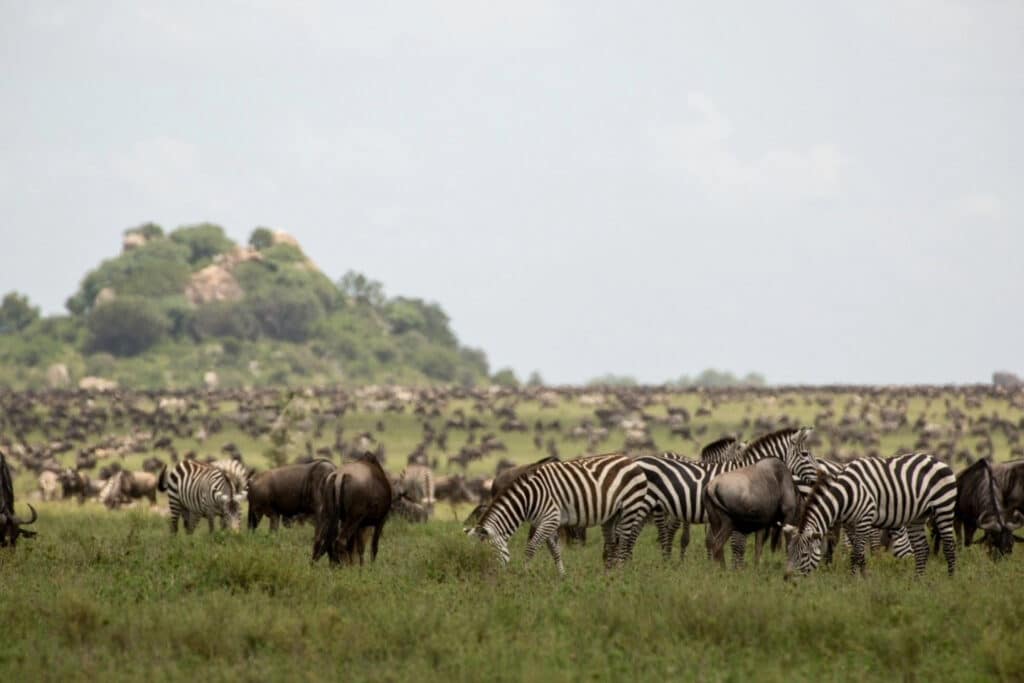
From July to September, the northern Serengeti becomes the stage for one of nature’s most dramatic events — the Great Migration. Vast herds of wildebeest, zebras, and gazelles gather near the Mara River, where they face a perilous challenge: crossing the crocodile-infested waters in search of greener pastures.
While the river crossing is famous for its intense scenes of survival, recent years have shown that not all herds make the leap into Kenya. Many now remain in the northern Serengeti, where plentiful fresh grazing offers a safer haven. This shift makes the Serengeti a prime destination to witness the heart of the migration in action.
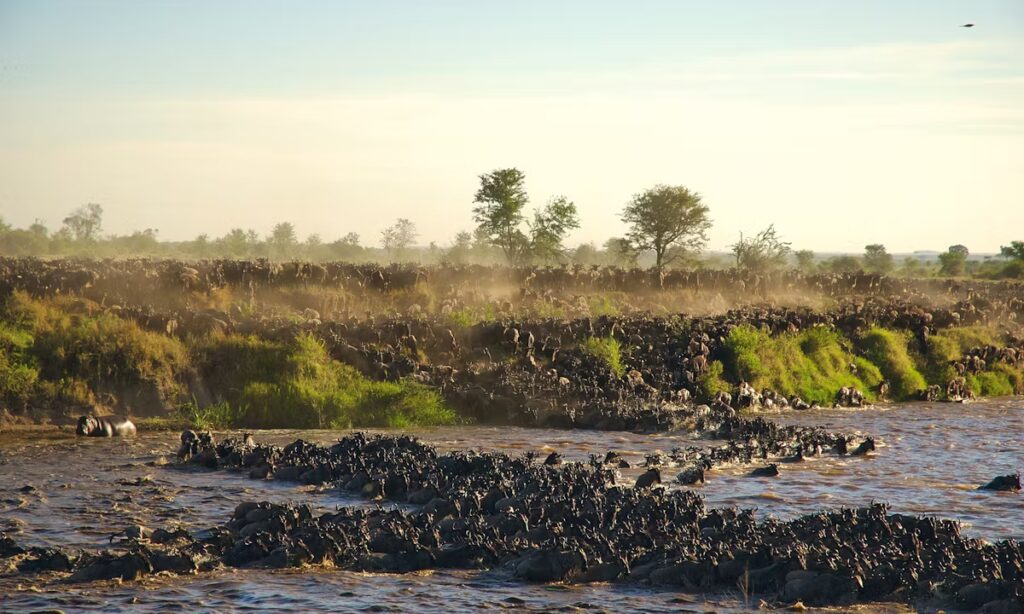
Between October and November, the Great Migration herds journey south from the northern Serengeti toward the lush grasslands of the Ndutu region, passing through the central Seronera area. By December, they settle in the southern Serengeti, where calving season begins and the migration cycle starts anew.
With over a decade of expertise, our team is ready to customize your itinerary for the ultimate adventure tailored to your preferences.
The Serengeti Great Migration is a year-round journey, and the best time to visit depends on what part of this natural spectacle you wish to witness. While weather patterns have become less predictable in recent years, the migration still follows a general seasonal rhythm.
Here’s a breakdown of the Serengeti Migration timeline:
| Approximate Period | Event | Location |
|---|---|---|
| December to January | Herds begin their movement | Southern Serengeti (Ndutu) |
| February to April | Calving & predator encounters | Southern Serengeti |
| May to June | Herds move westward | Western Serengeti |
| July to September | Dramatic river crossings | Northern Serengeti |
| October to November | Trek back to the south | Central to Southern Serengeti |
While every phase has its unique charm, many travelers choose to visit between July and September to witness the dramatic Mara River crossings in the northern Serengeti — one of the most breathtaking scenes in the natural world.
The best place to witness the Serengeti Great Migration depends on the time of year and what part of the journey you wish to experience. From December to April, the herds gather in the Southern and Central Serengeti, where the vast grasslands provide ideal conditions for calving. This season offers dramatic wildlife encounters, as newborn wildebeest take their first steps while predators like lions and cheetahs lurk nearby, creating unforgettable moments of nature’s raw beauty.
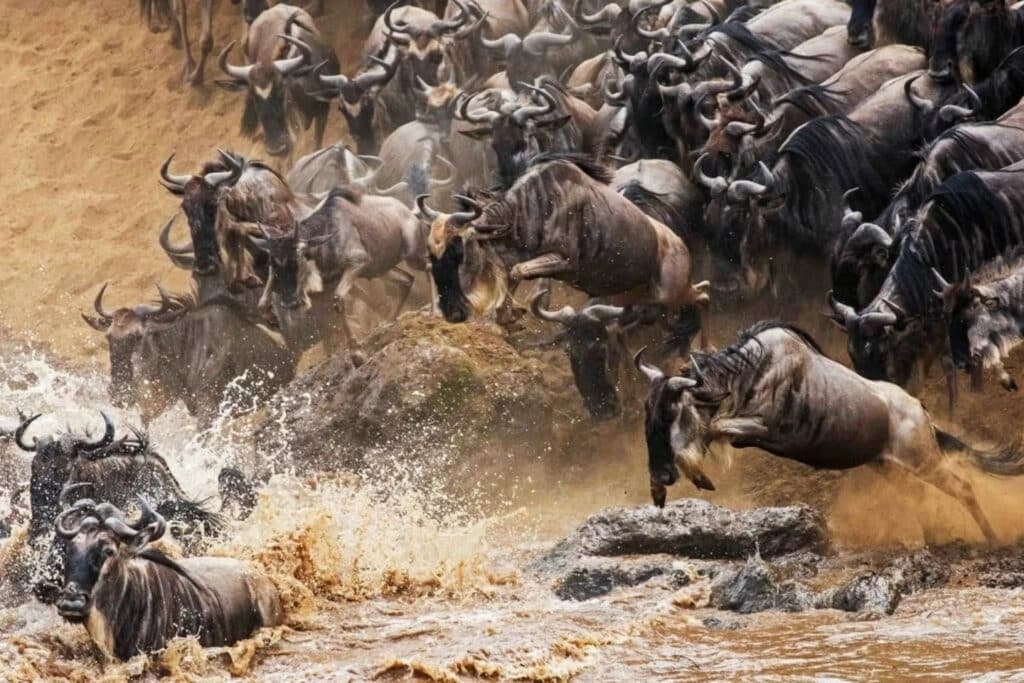
To catch the dramatic river crossings during the Serengeti Great Migration, head to the northern Serengeti near the Mara River. This is where herds brave crocodile-infested waters in their quest for greener pastures. Several well-positioned tented camps in this region offer front-row seats to this unforgettable natural event.
Witness the awe-inspiring Serengeti Great Migration and unwind in comfort at your preferred luxury lodge or tented camp. Follow millions of wildebeest, zebras, and gazelles as they journey across the plains in one of nature’s most spectacular events.
Witnessing the Serengeti Great Migration is a truly unforgettable experience. To make the most of this natural spectacle, it’s essential to explore Tanzania with an experienced and reliable safari expert.
At Great Image Expedition, we specialize in crafting personalized safaris that match your travel dreams. Each journey is tailored to ensure an immersive and memorable adventure—one you’ll treasure for a lifetime.
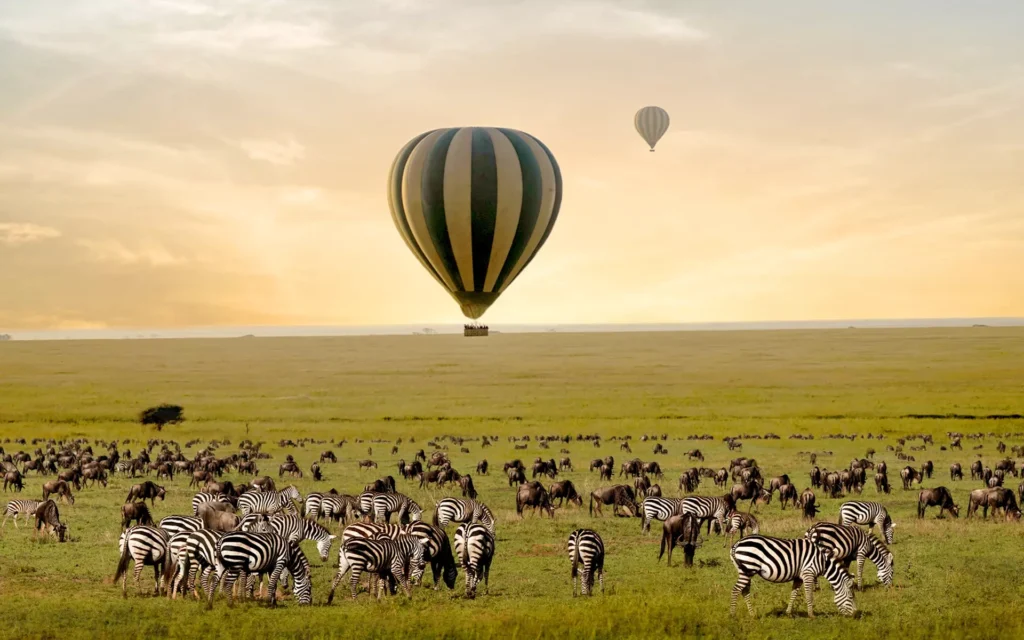
To catch the dramatic river crossings during the Serengeti Great Migration, head to the northern Serengeti near the Mara River. This is where herds brave crocodile-infested waters in their quest for greener pastures. Several well-positioned tented camps in this region offer front-row seats to this unforgettable natural event.
So, you know the best time, place, and the right team to join for the Great Wildebeest Migration in Tanzania—yes, that’s us! But how do you actually plan it?
While we’ll make your safari unforgettable once you arrive, proper planning is key. A migration safari requires thoughtful preparation to ensure everything goes smoothly.
Here are a few essential tips to help you plan your Serengeti Wildebeest Migration adventure.
Booking your safari well in advance is essential—especially if you want to catch the dramatic river crossings during the peak migration season from June to October. This period attracts many travelers, and top camps and lodges get reserved quickly. To secure your ideal itinerary, we recommend booking at least a year ahead.
The Great Migration happens year-round in different parts of the Serengeti. While peak season draws large crowds, you can opt for quieter months to enjoy a more peaceful, intimate safari. Our strategically located camps help you escape the busiest areas while still offering excellent views of the migration.
There’s more to a migration safari than just game drives. With us, you can customize your trip by adding unique experiences like hot air balloon safaris, guided bush walks, or cultural visits. These additions make your journey even more memorable and tailored to your style.
The Great Migration is an annual movement of over 1.5 million wildebeest, along with zebras and gazelles, across the Serengeti (Tanzania) and Maasai Mara (Kenya) in search of fresh grazing and water.
The best time depends on what you want to see:
January–March: Calving season in Southern Serengeti (Ndutu area)
June–July: River crossings in Western Serengeti and Grumeti
July–October: Dramatic Mara River crossings in Northern Serengeti
The herds move through different regions of Serengeti throughout the year—Southern, Central, Western, and Northern. The location depends on the season and rainfall patterns.
To increase your chances, plan to visit the Northern Serengeti between late July and October and stay for several days, as crossings are unpredictable and depend on animal behavior.
The migration primarily includes wildebeest, zebras, and Thomson’s gazelles, followed closely by predators like lions, cheetahs, hyenas, and crocodiles that take advantage of the movement.
While the crossings are intense and dramatic, you will observe them from a safe and strategic distance with your guide. No physical danger is involved for visitors.
Mobile tented camps and permanent lodges that follow or are located near the migration path offer the best experiences. Some camps are seasonally relocated to stay close to the action.
A minimum of 4 to 6 days is recommended to increase your chances of witnessing key events like river crossings and predator-prey interactions.
Yes, rainfall patterns influence the timing and location of the herds. Climate change has caused some variations in traditional migration routes and schedules.
Absolutely. Many visitors combine Serengeti with Ngorongoro Crater, Tarangire National Park, and Lake Manyara, or end the trip with a beach escape in Zanzibar.
Read the latest reviews from travellers who have planned and booked their trips with us.
 Posted on Google
 Daniel judd17 September 2026
 We wanted to go on a safari for our honeymoon but after speaking to many uk based companies we was left disheartened with the lack on options they provided for itinerary and accommodation. So we done a lot of research online and found Raymond at Great Image Expedition, nothing was to much trouble everything was completely bespoke and exactly how we dream it to be. There was no pressure what so ever and we was completely confident with paying for our trip with a Tanzania based company. Our guides Godlistern & Simba was extremely friendly and knowledgeable and very respectful of the animals and their country. I would 1000% recommend this company for your next safari in Tanzania!Posted on Tripadvisor
 Rian21 August 2026
Verified
Vehicle Breakdown Every day had a same vehicle breakdown, everything went rush, guide was very harsh. The nature itself was outstanding, Tanzania is blessed.Posted on Tripadvisor Tribue Travels21 August 2026
Verified
Great Image Expedition is the best local talent Great Image Expedition isn’t just another tour company, it’s what a Tanzania experience should be. What makes them stand out is their local connection. They use local guides and experts who actually know Tanzania, its people, its wildlife, and its culture. That local knowledge creates experiences you simply can’t get from a company operating from the outside. From incredible safari moments to authentic cultural experiences, every detail felt personal, genuine, and thoughtfully planned. Their team didn’t just show us Tanzania, they connected us to Tanzania. If you want luxury, adventure, authenticity, and experiences that go beyond the typical tourist itinerary, Great Image Expedition is the company to book.Posted on Google Daryn’s Ride Through Life16 August 2026
 We were referred to Great Image Expeditions through our photographer when we were planning our elopement, and unfortunately, while parts of our experience were amazing, our overall experience with the company has been extremely disappointing. Our safari was fantastic, and Humphrey was absolutely incredible. He made the experience memorable, and the accommodations were also great. Unfortunately, our experience with the company itself has been a completely different story. We have been trying to get money that is owed to us from Raymond for almost two months now. What should have been a simple matter has turned into an exhausting cycle of excuses, delays, and what feels like being given the runaround. We have repeatedly been told different things and are still waiting for the money we are owed. That experience has really overshadowed what should have been an amazing overall trip. If I knew then what I know now about climbing Kilimanjaro, I would choose a different company. There are companies that offer better amenities and, based on our experience, a much better overall customer experience. I’m disappointed because we had such an incredible experience with Humphrey on safari, which makes the way the financial issue has been handled even more frustrating. I hope Raymond eventually makes this right, but after almost two months of excuses and games, it has become difficult to have any confidence in the company.Posted on Tripadvisor
 Rawaa M3 August 2026Exceptional Service from Start to Finish We went to Tanzania for our honeymoon, and Raymond from Great Image Expedition made the entire experience so easy. He planned our whole trip and took care of every detail, so we could simply enjoy it. For our safari, we were with Humpher, whose knowledge, experience, and passion made the adventure truly unforgettable. We learned so much and had an incredible time. We had an amazing experience with Great Image Expedition from start to finish and couldn’t recommend them more!

 Facebook