
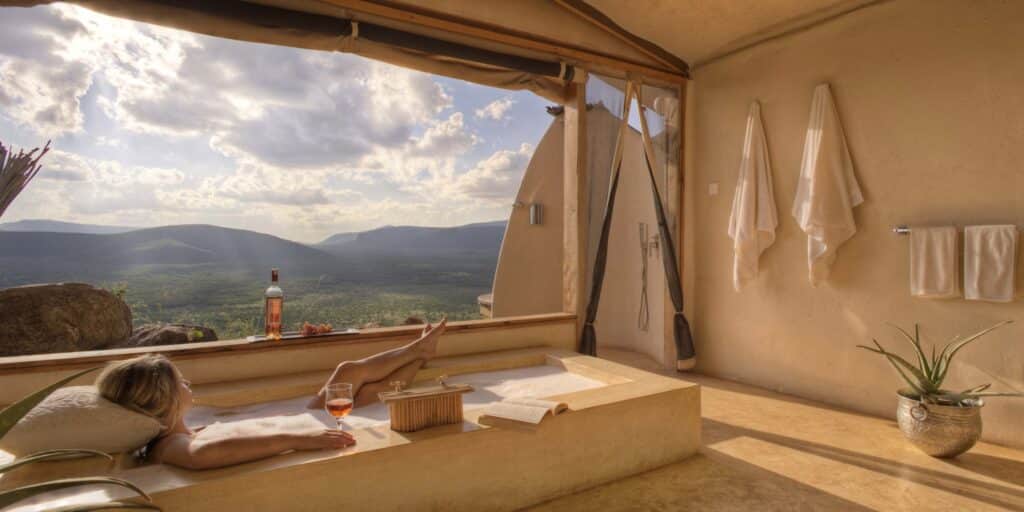
Many people love the idea of seeing wild animals in Africa but hesitate because they imagine rough camping, shared bathrooms, insects, and uncomfortable nights. The truth is that a safari does not have to involve camping at all. In fact, modern safaris are designed for comfort, privacy, and relaxation, making them ideal for people who do not enjoy traditional camping.
A safari for non-campers focuses on staying in lodges or luxury tented camps that offer hotel-level comfort while still being located in prime wildlife areas. These accommodations allow travelers to experience nature during the day and return to comfort, hot showers, and proper beds in the evening.
What a Non-Camping Safari Actually Looks Like
A typical day on a non-camping safari feels more like staying at a nature resort than going on a camping trip. Guests wake up in a comfortable room or spacious tent with a real bed, private bathroom, and electricity. Early morning game drives are followed by breakfast back at the lodge, relaxation time, and another game drive later in the day.
There is no need to pitch tents, cook meals over a fire, or sleep on the ground. Meals are prepared by professional chefs, rooms are serviced daily, and staff handle all logistics. For travelers who value comfort, this type of safari offers the best of both worlds.
Lodges vs Luxury Tented Camps Explained Simply
Many people hear the word “tent” and assume discomfort, but luxury tented camps are very different from basic camping. These tents are permanent structures with solid floors, proper beds, ensuite bathrooms, and often even bathtubs or outdoor showers. The canvas walls simply allow guests to feel closer to nature without sacrificing comfort.
Safari lodges, on the other hand, are permanent buildings made of stone, wood, or concrete. They function much like hotels and often include swimming pools, lounges, spas, and panoramic viewing decks. Both options are perfect for people who do not like camping, and the choice depends on personal preference rather than comfort level.
Wildlife Viewing Without Sacrificing Comfort
One of the biggest advantages of a non-camping safari is that comfort does not reduce the quality of wildlife viewing. In many cases, lodges and luxury camps are located inside or right next to major national parks, allowing easy access to prime game viewing areas.
Game drives are conducted in comfortable safari vehicles with experienced guides, and guests return to the lodge between drives. Some accommodations even allow wildlife viewing directly from private balconies or communal terraces, making the experience even more relaxed.
Best Safari Destinations for Non-Campers
Certain safari destinations are especially suitable for travelers who prefer comfort. Areas such as the Masai Mara, Amboseli, Lake Nakuru, and Samburu in Kenya offer a wide range of high-quality lodges and luxury camps. These destinations combine excellent wildlife viewing with strong hospitality standards.
Private conservancies are also ideal for non-campers, as they tend to offer quieter environments, fewer vehicles, and more personalized service. They often include additional experiences such as guided walks, night game drives, and cultural visits, all without compromising comfort.
Food, Bathrooms, and Daily Comfort
One of the main concerns for people who dislike camping is food and sanitation. On a lodge-based safari, meals are prepared fresh and served in proper dining areas. Special dietary requirements are usually accommodated, and food quality often exceeds expectations.
Bathrooms are private, clean, and equipped with hot showers and modern toilets. Electricity is usually available, either full-time or during set hours, and many lodges offer Wi-Fi in common areas. These details make a safari comfortable even for travelers who have never enjoyed outdoor travel before.
Is a Safari Still Authentic Without Camping?
A common question is whether avoiding camping reduces the authenticity of the safari experience. In reality, authenticity comes from being in the wild, seeing animals in their natural habitat, and learning from knowledgeable guides. Comfort does not take away from these elements.
In fact, many travelers find that being well-rested and comfortable allows them to enjoy game drives more and stay more engaged with the experience. A relaxed traveler often notices more details, listens better to guides, and enjoys the safari more deeply.
Who Should Choose a Non-Camping Safari?
Safaris without camping are ideal for older travelers, families, honeymooners, photographers, and anyone who values comfort and privacy. They are also perfect for first-time safari visitors who want a smooth introduction to wildlife travel without any physical discomfort.
Travelers who dislike insects, cold nights, or shared facilities often discover that a lodge-based safari exceeds their expectations and changes how they view safari travel entirely.
Final Thoughts on Safari Without Camping
A safari does not have to mean roughing it in the wilderness. For people who do not like camping, modern safari lodges and luxury tented camps offer a refined, comfortable way to experience Africa’s wildlife. You can enjoy breathtaking landscapes, close-up animal encounters, and cultural experiences while sleeping in a proper bed and enjoying high-quality service.
If the idea of camping has ever stopped you from considering a safari, it is time to rethink it. A non-camping safari proves that comfort and adventure can exist side by side.


 Google
  Facebook
  Tripadvisor


